Blog · Planche · 7 min read
Tuck planche hips too low: how to lean enough
Low hips are how your body balances a lean it cannot hold yet. Lean further in small steps, push the floor away, and count only the seconds your back stays level.
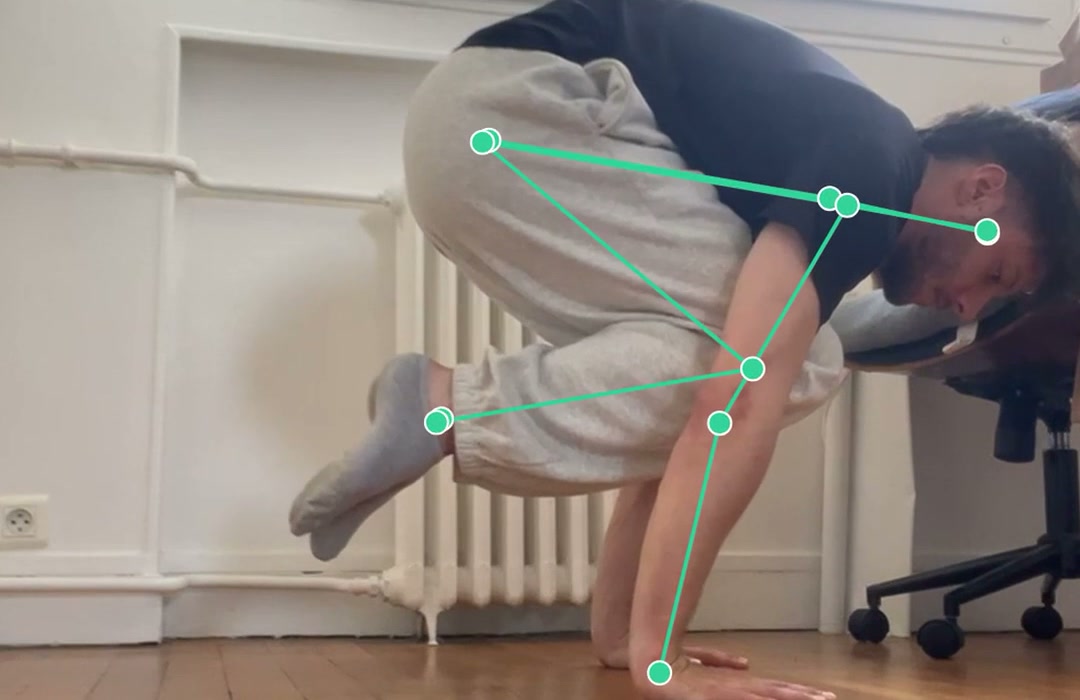
Your hips sit too low in the tuck planche because your shoulders are not far enough in front of your hands to balance a level back, or because they are and your straight arms cannot hold that lean yet. Sinking the hips shortens the lever. Lean further in small steps, push the floor away, and count only level seconds.
You are far from alone. Across the tuck and advanced tuck planche scans analyzed by CaliLens, 34.4% held the hips below the shoulder line, about one in three.
Being stuck here despite good leans is a common complaint on r/bodyweightfitness. In one thread, an athlete who could hold planche leans for 4 sets of 15 seconds described their tuck planche as extremely bad. Replies suggested pushing the lean farther in measured steps, and a band under the hips as a bridge to the unassisted hold.
Why do my hips drop in the tuck planche?
Your hips drop because the body always finds balance over the hands. When the shoulders do not travel far enough forward, the hips sink toward the hands until the weight is balanced again.
In a tuck, most of your weight sits around your hips, a full torso length behind your shoulders when your back is level. To balance that weight over your hands, your shoulders have to move well past them. Steven Low explains in The Fundamentals of Bodyweight Strength Training that moving the center of mass "further away from the fulcrum" increases the torque. A level back is the longest version of the tuck, so any tilt, down or up, makes the hold easier.
Four things usually drop the hips, and they often stack:
- Not enough lean. The shoulders stop at or just past the hands, so a level back cannot balance.
- A lean you cannot hold. You reach the right position for a second, then the shoulders slide back and the hips follow.
- Shoulder blades squeezed together. Without protraction (the shoulder blades pushed apart, which lifts the upper back), the chest sinks between the arms and the hips lose height. In CaliLens tuck and advanced tuck planche scans, 26.3% showed insufficient protraction.
- A loose tuck. Knees that hang away from the chest move weight backward, which asks for even more lean.
Is it a lean problem or a strength problem?
Usually both. Many low-hip holds already put the shoulders past the hands; what is missing is enough lean, held with locked elbows.
Across CaliLens tuck and advanced tuck planche scans, only 9.1% were flagged for insufficient forward lean. That check only fires when the shoulders barely clear the hands, so passing it does not prove you lean enough. It does suggest that many athletes with low hips get their shoulders past their hands, just not far enough, or not for long.
Run this test before your next session. Get into a planche lean with your feet on the floor, elbows locked, shoulders pushed away from the floor. Lean until you feel your limit and hold 10 seconds. Film it from the side. If your shoulders in that lean sit behind where your tuck needs them, the tuck cannot level yet, and planche leans are your main work.
How far should you lean in a tuck planche?
Lean as far as a level back requires. For most people, that means the shoulders clearly in front of the fingers, and a common cue is to bring your nose past your fingertips.
A basic planche lean starts with the shoulders just in front of the wrists, elbow pits facing forward, shoulders pulled down and arms actively pressing into the floor. The tuck needs more lean than that first step. Your proportions set the exact distance: a 2023 simulation study of the planche tested 80 body types and found body type to be a critical factor in performing the skill. The right lean for you is the one where your back sits level on video.
How do I check my tuck planche on video?
Film from the side with the camera at hip height. From the front, low hips and a short lean are almost invisible.
- Set the phone level, at the height your hips will be, 2 to 3 meters (7 to 10 feet) away, in landscape, with your hands and feet in frame.
- Hold your best tuck and start counting once you are still.
- Pause at the first second, the middle and the end. On each frame, check that your elbows are straight, your shoulders sit in front of your hands, and your hip is level with your shoulder.
- Check that your upper back sits high between your shoulders, not sunk between them.
- Watch your feet: they should stay at one height. Across the tuck and advanced tuck planche scans CaliLens has analyzed, half were flagged as unstable, with the feet sinking and rising during the hold.
CaliLens reads a tuck the same way. It measures the angle of your back from shoulder to hip and flags a back that tilts about 12 degrees or more toward the hips for a sustained part of the hold. It also checks your lean, whether your upper back stays pushed up and whether your feet hold one height. For a full setup, read how to film yourself for a form check.
How do I fix low hips in the tuck planche?
Build the lean first, then the tuck. In practice that means planche leans and protraction work, short tuck holds that stop at the first hip drop, and a tight tuck with the pelvis under.
- Cue
- Push the floor away and bring your shoulders past your fingertips.
- Why
- Low hips mean the shoulders stopped pushing forward and down. Level hips need both a longer lean and the straight-arm strength to hold it.
- Drill
- Planche lean, 3 x 10 seconds, nose past your fingertips, elbows locked.
A session built around it, two or three times a week:
- Measured planche leans: 3 to 4 x 10 to 15 seconds, feet on the floor. Mark your hand position on the floor. Once all sets feel solid, place your hands 2 to 3 centimeters (about an inch) farther back toward your feet and lean to the same shoulder position, elbows locked.
- Scapular planche leans: 3 x 8 reps. In the lean, push your upper back as high as you can, then let it sink, elbows locked.
- Raised planche lean with bent legs: a bridge between the lean and the tuck. Feet on a box close to your hands, knees bent, lean until the tuck shape feels light. 3 x 10 seconds.
- Short tuck planche holds: Steven Low programs isometrics at about 60 to 70 percent of your max hold. If your best level hold is 6 seconds, do 6 sets of 4 seconds and end each one at the first hip drop.
- Hip-raise tuck on parallettes or two chairs: in a support hold, pull your knees up and press your hips back and up as far as your locked elbows allow. 5 x 5 seconds, a little higher each week, until your back reaches level.
- Hollow body hold: 3 x 20 seconds, ribs down, pelvis tucked, to learn the pelvic position you want in the tuck.
Parallettes can help: they raise your hands, give your knees room and keep your wrists straighter. Your wrists carry the whole hold, so warm them up before every session. If they hurt, stop the painful variation and see a physiotherapist if the pain persists.
Tuck planche vs frog stand: what is the difference?
The frog stand rests your knees on your arms, usually bent, and teaches balance on your hands. The tuck planche takes the knees off the arms and straightens the elbows, which turns it into a straight-arm strength hold.
The Overcoming Gravity progression charts put them in sequence: frog stand at level 3, straight-arm frog stand at level 4, tuck planche at level 5. If the frog stand feels easy and the tuck planche feels impossible, the straight-arm frog stand is the missing step. Then lift one knee off the arm at a time before you lift both.
The same gap shows up in a similar r/bodyweightfitness thread: an athlete who found the frog stand too easy could not hold a tuck planche for more than a second. Replies suggested the straight-arm frog stand, and a tuck between two chairs with the hips pressed a little higher over time, the hip-raise drill above.
How long does it take to learn the tuck planche?
There is no fixed timeline. As a coaching estimate, a few months of consistent practice is typical if you start from solid planche leans, and longer if your wrists or your bodyweight slow you down.
For reference, across the tuck planche scans analyzed by CaliLens, the median hold was 8.3 seconds, and that clock also counts holds with faults. Judge your progress by level seconds on video, not by the timer alone.
When can you move on to the advanced tuck planche?
Move on when your tuck holds 3 sets of 8 seconds with the hips level, elbows locked and feet steady, checked on video. Eight clean seconds is the bar used across this blog for static skills.
The advanced tuck flattens your back and opens your hips, so the weight moves further behind your shoulders and the lean has to grow again. Expect short holds at first, and use the same exit rule. The logic is the same for every skill, as explained in when to progress in calisthenics. Still deciding between this skill and the lever? Read front lever or planche first.
Frequently asked
How far should I lean in a tuck planche?
Far enough that your hips can stay level with your shoulders. For most people that puts the shoulders clearly in front of the hands, often past the fingertips. The exact distance depends on your proportions, so find it on video rather than copying someone else's lean.
Are high hips better than low hips in a tuck planche?
Neither. Tilting the back up or down shortens the horizontal distance between your shoulders and your hips, which makes the hold easier than a level tuck. Aim for a back parallel to the floor, even if the hold gets shorter.
What is the difference between a frog stand and a tuck planche?
In a frog stand, your knees rest on your arms, which are usually bent. In a tuck planche, your arms are straight and your knees float, tucked to your chest. The frog stand teaches balance on the hands; the tuck planche is a straight-arm strength hold.
Should my back be rounded in a tuck planche?
Your shoulder blades should be pushed apart (protracted), which makes the upper back look slightly rounded from the side. Coaches disagree on how much actual rounding of the spine is fine, but they agree the shoulder blades should never be squeezed together. Your lower back should not arch: tuck the pelvis under and keep the ribs down.
How long does it take to learn the tuck planche?
There is no fixed timeline. As a coaching estimate, a few months of practice two or three times a week is common for someone who already holds solid planche leans, and it can take longer. Wrist comfort and bodyweight both change the pace.